
Kitay Gorod attractions
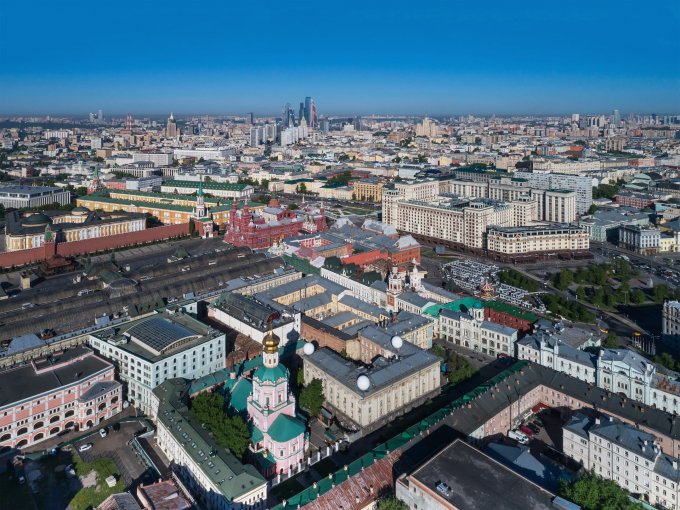
This place is well known not only to residents of the capital. Kitay-gorod is called a historical and cultural center, and recognizable sights are collected here. Geographically, Red Square and the Kremlin are located here, once this place was reliably protected by a high fortress wall. But even now, Kitay-gorod is one of the most beloved tourist destinations in the Russian capital.
The picturesque historical southern border runs very close to the Moskva River. From the north, Okhotny Ryad and Teatralnaya are just around the corner, and if you walk along the eastern wall, you can see the Lubyanka and the Old Square. In the modern sense, Kitay-gorod is the Tver Administrative District, and you can easily get to this area by metro. This is where our journey through the beauties of the capital's center begins.
A bit of history
The name appeared quite a long time ago, which is strange for a Russian person. Historians have put forward several different theories. According to one of them, the basis was the Tatar word "China", which means "average" in translation. The name is also attributed to Italian, Turkic and, of course, Russian origin.
Naturally, the name has nothing to do with China. At least there is a legend that many years ago this place was used to sell luxurious fabrics, which were brought by merchants from China itself.
Initially, the city was protected by a deep moat, but after almost two centuries it was decided to build a wall. Only a few fragments have survived to our time - the rest was destroyed during the Soviet era. You can see these walls and touch the history on Revolution Square or by going underground at the Kitay-Gorod metro station.
In the 16th century, the city began to change a lot along with its inhabitants. He sometimes had aristocratic features, sometimes merchant, sometimes noble. Some of the residential buildings were occupied by the clergy of that time, as there were many monasteries, churches and temples nearby. Trade was also in full swing here, educational institutions were opened. And it was in Kitay-gorod that the Printing Yard first appeared.
That is why in ancient times and to this day, China City is considered very prestigious and elite.
Kazan Cathedral
Almost immediately after Russia was liberated from the Polish-Lithuanian troops, the construction of the Kazan Cathedral was announced. There are legends that it was through the Kazan icon that the Virgin Mary stood up for the Russian people, which finally allowed them to win. Moreover, the cathedral was built by the first representative of the Romanov dynasty, Mikhail Fedorovich. And from the middle of the 17th century to the present day, Kazan Cathedral has become one of the most important churches not only in Moscow, but also in Russia.
If we look at the shape of the temple, it can be seen that it is square, typical of buildings of that time. It is crowned by kokoshniks who are sent to the Donskoy Monastery. Of course, such a cathedral could not remain without a tent-roofed bell tower, and if you go to the northeast side, you can see the chapel of Averky of Hierapolis.
This cathedral is quite easy to find - it is located directly opposite GUM. You can find it any day from 8 a.m. to 8 p.m. The cathedral is operational, so believers prefer to go inside from the entrance, which looks at the Red Square.
St. Basil's Cathedral
Who doesn't know the most important Moscow cathedral? St. Basil's Cathedral is a real value, storing exhibits of the State Historical Museum inside. Moreover, this architectural creation has been recognized by UNESCO as one of the world Heritage sites.
Interestingly, the temple is not just one building. These are 10 separate, completely independent churches, which are called chapels. Some of them were built at the same time when the most important battles for Kazan took place.
The museum is open to everyone who wants to visit it, you just need to climb the spiral staircase. Then an incredible collection of icons will open before the eyes of visitors, some of them were painted back in the XVI century. The walls of the temple also deserve attention: the frescoes have been preserved in excellent condition. And, of course, you should definitely see the exposition of richly decorated church attributes.
Trinity Church in Nikitniki
This temple of the 17th century was built for almost a quarter of a century. The main "sponsor" was Grigory Nikitnikov, thanks to whom the five-domed Trinity Church now exists. The temple did not arise from scratch - before the terrible fire that destroyed the wooden structure, the church of Nikita the Martyr on Clay stood here. It was decided to build a new temple from less combustible materials. Therefore, the building has come down to us almost in its original form.
The painting in the temple is considered one of the best: It is not only rich, but also decorated with stunning biblical images based on engravings from Holland itself. The Jerusalem Rose, also known as the chalice for consecrating water, is located here. It was created from a single piece of stone, and historically it can be found in the lower temple. It's definitely worth a look.
Gostiny Dvor
It is not so difficult to find it - Varvarka and Ilyinka streets are nearby, and Gostiny Dvor stands here at the shopping place. Once upon a time, these buildings were built of wood, and merchants from different cities and countries stayed there to spend the night, eat and relax. They also traded here, competing with the locals.
In the 17th century, it was decided to remove buildings made of wood by building a building in stone. Then it was divided into several main sectors: the Fish and Salt Yards sold goods corresponding to the name. And in the New and Old Courtyards, merchants stored their goods and traded them on the spot. New buildings and high protective walls appeared, but literally a hundred years later, Gostiny Dvor began to collapse. Then it was decided to build all over again.
Unfortunately, it didn't help either. The three-storey building did not last even ten years, as the courtyard completely burned down. Despite all the efforts invested, little could be saved, even the merchants' warehouses were looted and damaged. But the Gostiny Dvor was not abandoned, but new attempts were made to restore the structure. However, a little differently, it was decided to build a new complex nearby.
The old Gostiny Dvor was also restored, but at the end of the 20th century. It has changed significantly and bears little resemblance to its original appearance. Now there is an attic, a dome instead of the usual roof and a granite courtyard. This is how Gostiny Dvor was brought back to life, but now it is very different from the long-accepted appearance of this territory.
Now Gostiny Dvor is a huge complex, where not only various shops are open. Tourists may find themselves in a fashion museum or art gallery. Here you can visit dozens of fairs, festivals and even fashion week.
Revolution Square
Surprisingly, the square did not exist before because the Neglinnaya River flowed here. It was along its shore that one of the protective walls of Kitay-gorod stretched. A little later, the Voskresensky Bridge was built here. During the time of Peter the Great, bastions of earth were built between the wall and the river itself. They stood until the 19th century, when they were demolished - at the same moment the river was let through the pipe.
The new territory was cleared, and the Voskresenskaya Square appeared in this place. But this name did not last long: after the revolution in 1917, the square received a new name, in honor of the revolution itself and the October Uprising.
The Old English Courtyard
In the 16th century, active trade was conducted on the territory of the Old English Court. Now tourists and guests of this place can see with their own eyes a unique exhibition illustrating the development of trade relations between Britain and Russia. Ivan the Terrible gave the British the right to trade on this land, and even a special place was allocated, but later overseas merchants acquired ownership of a much larger building. That's how the English court got the prefix "Old".
In the middle of the 17th century, at the instigation of Tsar Alexei Romanov, trade with the British was completely stopped. They hastily and forcibly left Moscow, and the yard itself was sold. The owners changed several times, and almost every one of them considered it necessary to rebuild the building to their own taste, so nothing remained of the original idea. They wanted to demolish the Soviet building, but the architectural monument was nevertheless preserved. Moreover, reconstruction has been carried out, and now tourists can not only admire the beauty of the building, but also visit the museum, which is located inside.
Chambers of the Romanov Boyars
Historians believe that the chambers of the boyars were built no later than the 16th century. Legend has it that it was in this place that the first representative of the Romanov dynasty, Mikhail Fedorovich, was born. Now this place attracts tourists because of the picturesque view that opens onto the Moskva River.
Main department store — GUMThe main store in Russia appeared at the end of the 19th century. Back then, GUM had a completely different name: the Upper Shopping Arcade. This place is now, as before, one of the key trading locations in Russia. For many years, GUM was the central store not only in terms of location, but also in terms of importance for the development of trade.
The Resurrection Gate
Before receiving its final name, the Voskresensky Gate changed several names: Lvinye, Neglinye. At the end of the 17th century, the rooms above the gate were completely rebuilt, and at the same time the towers with the double-headed eagle appeared. An icon appeared above the gate, in honor of which they became the Resurrection.
The source of the photo is published unchanged - Authorship: A.Savin. Own work, FAL