
Legends of the Moscow Kremlin
- Legends of the Moscow Kremlin: secrets of history, legends and facts
- The Moscow Kremlin: a brief history
- Legends and myths of the Kremlin
- Secrets of the underground
- Excavations of the sexton
- Shcherbatov's attempt
- The spring
- Unexpected finds
- Underground roads
- The Kremlin – The Underground
-
Ghosts of the Dungeon
- Underground City
- The strangest finds
- Tainitskaya Tower
- Sergei Devyatov's monograph: a tavern was hidden under the Tsar Cannon, and the base under the demolished monument to Alexander II is still intact.
- Preserved dungeons of the Chudov Monastery
- Rumors and secret passages under the Palace of Congresses
- A hot spot on the slope
- Declassified Tsar Cannon Shot
- Boris Iofan's Military Disguise
- The invisible secrets of the Moscow Kremlin
- Birds of prey guarding the order , the Main orchestra and the Funny Palace
- Secret iconostasis and hidden bell Do you want to learn more about the Kremlin?
- Resume
Legends of the Moscow Kremlin: secrets of history, legends and facts
The Kremlin is one of the most mysterious and mystical places in Moscow. There are many mysteries and legends associated with it, which invariably excite the imagination. This is not just a majestic architectural and historical monument that has been attracting attention for centuries with its beauty and originality. Not everyone knows that the Kremlin buildings have an underground extension. Let's reveal all the secrets and show you what's inside.
The main Kremlin of Russia was built more than five centuries ago and still holds a huge number of unsolved mysteries. The dungeons of the Moscow Kremlin have attracted the attention of historians and archaeologists for many years. Research and excavations have been carried out here repeatedly, but the underground Kremlin still holds a lot of mysteries. In this article, we will talk about the main secrets of this historical monument and try to reveal them.
The Moscow Kremlin: a brief history
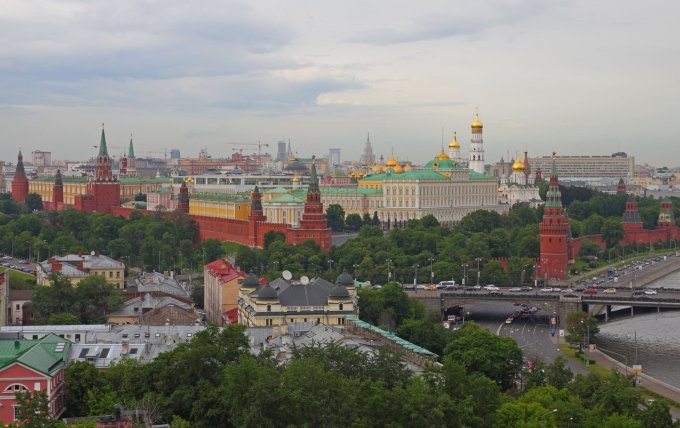
In the heart of Moscow, on Borovitsky Hill stands the majestic Kremlin ensemble. It has long become not only a symbol of the capital, but also of the whole of Russia. History itself decreed that the ordinary village of Krivichi, sprawled in the middle of the wilderness, eventually turned into the capital of a mighty Russian power.
In ancient Russia, the Kremlin or detinets was the name of the central, fortified part of the city with a fortress wall, loopholes and towers. The first Moscow Kremlin, built in 1156 by Prince Yuri Dolgoruky, was a wooden fortress surrounded by a moat and rampart.
During the reign of Ivan I, nicknamed Kalita (money bag), oak walls and towers were erected in Moscow and the first stone building, the Cathedral of the Assumption of the Virgin, was laid.
In 1367, Grand Duke Dmitry Donskoy surrounded the Kremlin with a powerful white limestone fortress wall. Since then, the capital has been nicknamed "Moscow White Stone." Large-scale construction began under Ivan III, who united a significant part of the Russian lands around Moscow and built a residence worthy of the "sovereign of all Russia" in the Kremlin.
Ivan III invited architects from Milan to build fortifications. It was in 1485-1495 that the walls and towers of the Kremlin, which still exist today, were built. The top of the walls is crowned with 1,045 dovetail–shaped battlements, which have the same appearance as the battlements of Italian castles. At the turn of the XV – XVI centuries, the Moscow Kremlin turned into an impregnable massive fortress lined with red brick.
In 1516, a moat was dug along the fortifications facing Red Square. After the Time of Troubles, the towers were decorated with tents, giving the Kremlin a modern look.
Legends and myths of the Kremlin
From time immemorial, the Moscow Kremlin has been not only a symbol of the unlimited power of the sovereign, but also a place of legend. Over the long history of the Kremlin temples and towers, so many legends have been created that there would be enough for an entire book.
The most famous legends tell about secret dungeons and underground passages. It is believed that they were invented by Italian architects who designed and built the Kremlin walls and towers. Many underground rooms have been preserved under the former Chudov Monastery, which was located in the eastern part of the Kremlin Hill until the 1930s. These are passages, temple interiors, and long galleries. To date, some of them are flooded with groundwater.
There are rumors among Muscovites that branched underground passages used to lead out from each of the Kremlin towers. The same secret passages connected all the royal palaces. When in the 1960s the builders began to dig a large excavation for the State Kremlin Palace, they discovered three underground passages built in the XVI century. The dungeons were so wide that you could ride a cart through them.
Underground passages were found during every major reconstruction. Most often, voids, sinkholes and labyrinths were walled up or simply filled with concrete for safety reasons.
One of the secrets of the Moscow Kremlin is also connected with its dungeons. For several centuries now, historians and archaeologists have been struggling with the mystery of the disappearance of the library of John IV the Terrible, which is also called Liberia. The Russian sovereign inherited a unique collection of ancient books and manuscripts from his grandmother Sophia Paleologos, who received these books as a dowry.
In historical documents, there is an inventory of the library, consisting of 800 volumes, but the collection itself has disappeared without a trace. Some researchers are convinced that it burned down in a fire or disappeared during the Troubles. But many are sure that the library is intact and hidden in one of the Kremlin's dungeons.
Finding books in underground vaults was not an accident. When Sophia Paleologos arrived in the city in 1472, she saw the terrible consequences of the fire that had raged in Moscow two years earlier. Realizing that the library she had brought could easily perish in a fire, Sophia ordered a spacious basement to be equipped for storage, which was located under the Kremlin Church of the Nativity of the Virgin. After that, valuable Liberia was always kept in the dungeons.
Secrets of the underground
The underground city carefully preserves its hidden secrets. There are suggestions that the Moscow dungeons contain untold riches accumulated during the existence of the principalities. Perhaps these assumptions explain in many ways the fact that a huge number of people, from professional researchers and archaeologists to simple amateurs, are trying to unravel the mysteries of the Moscow Kremlin. The existence of large-scale underground passages is confirmed by many documents from different years. Scientists not only from Russia were engaged in the study of these mysteries.
One of the entrances to the dungeons was discovered by chance, during the clearing of rubble in the lower rooms of the Senate Tower. The "mysterious" well, apparently, previously had several tiers. The partitions between them were worn out and collapsed from time to time.
Many contemporaries of all the Kremlin buildings will confidently call the Spasskaya Tower the main one. Her appearance is easily recognizable. However, it would be wrong to assume that it was she who was the first to be laid. In fact, the main building during the construction of the fortress was the Tainitskaya Tower. There was a secret passage to the river inside, and the tower itself occupied a significant place in the life of the local population. The durability of the Kremlin's buildings is explained by the use of bricks for construction.
There are suggestions that Leonardo da Vinci is also involved in the construction of the Kremlin walls, although no reliable evidence has yet been found.
Among the little-known facts about the Moscow Kremlin, there is also information about the existence of artificial hanging gardens and a huge artificial pond. Their location used to be the roof of the Embankment Chambers. A water tower was used to raise water from the Moskva River into the lake.
The Kremlin walls were not always red, as it might seem to the average man in the street. During the time of Napoleon, it was decided to paint the Kremlin complex white, and in this form the Kremlin existed for more than one year. In addition, the walls were repainted during the Great Patriotic War. But in this case, the painting was not festive, but rather a disguise. The Kremlin walls turned red again only two years after the Great Victory.
Excavations of the sexton
The legends about the Kremlin did not arise from scratch. Many of them are based on real documents, reports and notes of people who served. And hundreds of years of archaeology have not given up hope of penetrating the secrets of the dungeons.
They tried to explore them three times, and each time the excavation was stopped from above.
The first attempt in the autumn of 1718 was made by the sexton of the Church of St. John the Baptist on Presnya, Konon Osipov. Referring to the words of the clerk of the Grand Treasury Vasily Makariev, who in 1682, on the orders of Princess Sophia, descended into a secret passage leading from the Tainitskaya Tower to Sobakina (Corner Arsenal) and allegedly saw chambers filled with chests. The sexton asked Prince Romodanovsky for permission to look for them. Unfortunately, the deacon himself was no longer alive.
In the Tainitskaya tower, the Sexton found the entrance to the gallery, which had to be excavated, and they even gave him a soldier, but there was a danger of collapse, the work was curtailed. Six years later, Osipov returned to the search by decree of Peter I. The sexton was assigned to prisoners for work, but the search was unsuccessful. In the Arsenal corner room, Osipov found the entrance to the dungeon, which was flooded with water from a spring. Five meters later, he came across an Arsenal pole, and, breaking it in the middle, rested against the rock.
Ten years later, he conducted excavations inside the Kremlin to "intercept" Makariev's move, but was defeated again.
Shcherbatov's attempt
The story was continued in 1894. The case was picked up by an official of special assignments, Prince Nikolai Shcherbatov. In the Alarm Tower, he found the entrance to the walled-up gallery leading to the Konstantin-Eleninsky Tower. A 62-meter-long arched corridor was found in the Konstantin-Eleninsky Tower. At the end of the gallery, behind the brickwork, they found a cache of cannonballs. Later, Shcherbatov dismantled the Alarm Room floor and found a passage leading to this hiding place from the other side.
While exploring the Corner Arsenal Tower, Shcherbatov, like Osipov, was unable to penetrate further.
Then the prince decided to break through the underground gallery from the side of the Alexander Garden. The passage went under the Trinity Tower and led to a small chamber with stone arches, on the floor of which there was a hatch leading to the same room below. The upper chamber was connected by a corridor to another room. From the second chamber, a low tunnel opened into the wall.
Under the Borovitskaya tower, Shcherbatov found a chapel, a dungeon under a branch arrow tower, a passage that led to Imperial Square, and a "plantar battle" that allowed the space near the tower and the chamber under the congress to be kept under fire.
The spring
After the revolution, the Bolsheviks came to power and immediately took care of the citadel's security. They seized photos of Shcherbatov's passages, filled up the well in the Tainitskaya Tower, and walled up the lower chambers in Troitskaya. After a Red Army soldier fell into the ground in the courtyard of the government building in the fall of 1933, archaeologist Ignaty Stelletsky was invited to explore the dungeons. At one time, he put forward the theory that the well of the Tainitskaya tower was once dry, and there were passages from it.
His excavations of the "Osipovsky" passage under the Angular Arsenalnaya led to discoveries. An unloading arch was found under the wall, and an exit to the Alexander Garden was opened, which was immediately walled up. But then Stellecki ran into a block of stone. He believed that the passage was free of earth, but the scientist was forbidden to excavate and ordered to clear the dungeon of the Corner Arsenal to the bottom. It turned out that the spring, which flooded the dungeons every now and then, was enclosed in a stone well with a diameter of five meters and a depth of seven.
Unexpected finds
It was cleared to the bottom in 1975. Archaeologists found in it two military helmets, stirrups and fragments of chain mail from the end of the XV century, stone cores. A spillway was built at the bottom of the well, which was supposed to protect the tank from overflow. After it was cleared, the flooding problems stopped.
Besides archaeologists, builders also made discoveries. In 1930, on Red Square, they found an underground passage in which several skeletons in armor were found. At a depth of five meters, it went from the Spasskaya Tower towards the Frontal Place and had brick walls and a wrought iron vault. The passage was immediately covered with earth.
In 1960, after noticing a microscopic crack in Lenin's mausoleum, the architects began to find out the cause and found an underground passage under the mausoleum as tall as a man at a depth of 15 meters.
In June 1974, archaeologists discovered an inner-wall passage near the Middle Arsenal Tower. Behind the walled-up wall, a 15th-century staircase filled with earth opened, which could lead to the cherished tunnels. A year earlier, a gallery was found near the Alarm Tower, leading from the Alarm to the Spasskaya Tower, but the beginning and end of the gallery could not be found.
Underground roads
However, moves are not everything! After all, the territory of the Kremlin is large. On April 15, 1882, a cave opened in the middle of the road between Tsar Cannon and the wall of the Chudov Monastery. Three policemen could have walked along it in a row. One end of the tunnel rested against the wall of the Chudov Monastery, and the other was littered with stones.
When digging the foundation of the Annunciation Monastery in 1840, cellars and underground passages with piles of human remains were found. They tell about the whole road passing under the Annunciation Cathedral. Here, in the cathedral, Prince Shcherbatov discovered a secret place that could lead further down. The prince was clearing debris from the space under the floor and reached the mosaic floor, which could easily be the arch of an underground tunnel or structure. The mysterious iron door, allegedly located in the dungeons between the Annunciation and Archangel Cathedrals, remains a mystery.
The Kremlin is underground
Some particularly zealous researchers of underground Moscow assure us that the Kremlin was originally conceived as a huge underground structure, for which a excavation was dug on the site of Borovitsky Hill, in which a whole system of tunnels, rooms and galleries was laid. And only after that, the builders began to create the ground part of the Kremlin. Then, they say, the dungeon plans were lost or deliberately burned. If we take into account the depth of the cultural layer, which in some places reaches seven to eight meters inside the Kremlin, it is safe to say that many finds used to be located on the surface of Borovitsky Hill.
However, this does not make the mysteries any less.
The Ghosts of the Dungeon
According to people who serve at the presidential residence, the monk's ghost continues to roam the Kremlin premises to this day. They say that after midnight, with the doors closed, a breeze suddenly sweeps through the office, stirring the papers on the table. Then small objects fall noisily to the floor, crystal vases and ashtrays break.
But this is not the only ghost in this building inside the mystical triangle.
There is also a story about a small figure dressed in a long-skirted overcoat, which, after clear steps and the clearly audible clink of a key in the lock, was seen slowly retreating and disappearing into thin air. It took place in an old building located not far from the Patriarchal Chambers. There are also other ghost sightings.
The Underground City
There are rumors about the existence of an underground Red Square located under the surface. It is said that above the underground square there was a sky with stars, like in a planetarium. There was electrical equipment directly under the Mausoleum, which had a huge capacity. It is difficult to say when the underground city was created and what it was intended for.
Judging by the story of one of the Orthodox hierarchs who visited this mysterious place, its construction dates back to the 1940s and 1950s. At that time, there were serious concerns about the outbreak of World War 3, and this facility could become a refuge from colossal nuclear weapons.
The strangest finds
The very presence of dungeons in the Kremlin is not an out-of-the-ordinary phenomenon, as they are inherent in many ancient buildings. Ammunition was stored in them, and they were used to hide from enemies. The strange things that are found in the catacombs are surprising. Treasure chests, Ivan the Terrible's library, weapons depots, and even the Holy Grail were searched in the Kremlin's dungeons.
But they found something completely different, for example, skeletons in armor, human remains, instruments of torture, shackles, a cube with unusual symbols, probably intended for fortune-telling. But the strangest findings were the following. These are, for example, the weapons of Napoleon's soldiers and a bottle of wine made in the 19th century.
In 1985, workers in the dungeons located in the area of the Chudov Monastery discovered a coffin with a doll as tall as a man in formal clothes. Some people associate this find with the burial of Prince Romanov Sergei Alexandrovich, who died from a bomb thrown into a carriage by a revolutionary and left nothing of the body.
Tainitskaya TowerIt is assumed that it was connected by an underground passage to the bank of the Moskva River in order to have access to water during the siege. According to rumors, there was also a "cast" passage that took place under the river itself. Nevertheless, so far no underwater tunnels have been found near the Kremlin. Legend has it that the Taynitskaya Tower had caches for storing chests of gold, part of the state treasury.
Frontal area
It has a special mysterious aura. There is a belief that there is a narrow vertical crevice beneath it, which stretches so deep that it reaches the boiling bowels of the earth. Legend has it that secret sacrifices were made in this place. They were intended to feed the underground force with blood, designed to unite Russia.
Sergei Devyatov's monograph: a tavern was hidden under the Tsar Cannon, and the base under the demolished monument to Alexander II is still intact.
The Moscow publishing house Kuchkovo Pole has published the book "The Moscow Kremlin: Monuments and Shrines" by Sergei Devyatov, Adviser to the Director of the Federal Security Service of the Russian Federation, Head of the Department of Russian History of the XX – XXI Centuries at Lomonosov Moscow State University. The first post–Soviet monograph on the Kremlin was the result of painstaking and lengthy study of the richest documentary evidence, including the Kremlin Engineering Archive, the Archive of the Sovereign's Armory, and two pre-revolutionary two-volume books by Mikhail Fabricius and Sergei Bartenev. Here are some little-known facts from this monograph about the seemingly well-studied ensemble of the Moscow Kremlin.
1. The preserved dungeons of the Chudov Monastery
Several decades ago, Russian President Boris Yeltsin ordered the search for the burial site of the Governor-General of Moscow, Grand Duke Sergei Alexandrovich, who died from a terrorist bomb. "Having picked up the documents, we found out: this place is located in the basement of the church of St. Peter the Great. Metropolitan Alexy of the former Chudov Monastery, where, a few years after the murder of Sergei Alexandrovich, a shrine was specially consecrated in the name of St. Sergius.
"After digging up the grave, they found it relatively quickly," recalls Sergei Devyatov. "The remains of the Grand Duke were honorably reburied in the Romanov family tomb, the church of St. Roman the Sweet Singer of the Novospassky Stavropol Monastery." But at the same time, experts have made sure that all the underground structures of the Chudov monastery – passages, galleries, interior of churches – are perfectly preserved, although some of them are flooded, and in some places sand penetrates inside. Collectively, we are talking about more than half of the total building volume of the former monastery.
Unfortunately, the same cannot be said about the Voznesensky Monastery. In the 1930s, the Kremlin's 14th building, one of the administrative buildings of the current presidential administration, grew up in its place.
2. Rumors and secret passages under the Palace of Congresses
The author of the book claims that once built mainly for defensive purposes, the "rumor" passages went outside into the city from every major tower. However, already in the time of Elizabeth Petrovna, when the Kremlin was losing its former fortification significance, the passages began to crumble. There is an official memorandum addressed to the Empress, which states: the brick is being painted and falling off, the walls are melting.
"And yet the remnants of the old secret passages have come down to our days," says the author of the book. – When the excavation for the Kremlin Palace of Congresses was being dug in the middle of the last century, three very wide underground passages of the 16th century were discovered at once (in each one a cart could turn around). They led from the Miloslavsky Palace (Alexei Mikhailovich's father–in-law by his first wife), located near the Trinity Gate, to the center of the Kremlin - towards Natalia Kirillovna's palace, the Tsar's Teremny Palace and the Godunov Palace."
And in the Lower Tainitsky Garden, a three-story building with a total area of 990 square meters has been preserved underground, which once served as a pedestal for the monument to Alexander II, opened in 1898. "When the monument was demolished in 1918, it was simply buried," notes Devyatov.
3. A hot spot on the slope
Nearby, at the Tainitskaya Tower, the Katok tavern has been operating for several centuries. "They tried to close it many times, but in vain – probably the high profitability served as an obstacle, especially in the winter cold," the historian suggests. – The name is explained simply. To get into the Skating Rink, the clerks of the Kremlin orders had to overcome a 20-meter descent down a steep slope. And in order to bring the revelers back up, they had to constantly keep a sagittarius guard at two paths."
4. Declassified Tsar Cannon shot
Another unusual drinking establishment, the pub "At the Cannon", was located for a long time on Red Square directly under the main artillery cannon of the country. Contrary to popular misconception, the Tsar Cannon fired at least once, and this fact is introduced into scientific circulation by Devyatov's monograph for the first time.
"It became clear during the restoration of the monument in the 1980s," the author clarifies. – Apparently, this happened during tests at the Moscow Cannon Yard, where Andrei Chokhov cast the Tsar Cannon in 1586. Only, of course, she fired not with cannonballs, but with buckshot, a charge of 92-kilogram of smoky powder. Then the grapeshot cannon was installed 20 meters from the Frontal point on a rotating wooden circle. The most popular pub was located in the stone building below it. Interestingly, the gun itself has tactical and technical characteristics that exceed the real capabilities of the gun by 5.5 times."
5. Boris Iofan's Military Disguise
Sketches of the 1941 disguise were also published for the first time in a scientific publication. Boris Iofan, an academician of architecture, masterfully decorated the entire Kremlin territory: "roads" were pierced from the Moskva River to the Grand Kremlin Palace, a fake quarter grew on Red Square, the Mausoleum was covered with a 3-storey plywood building, the towers were decorated with painted windows. As a result, the Soviet pilots flying up to the city center did not recognize the bell tower of Ivan the Great, and the Germans simply could not see the target. During the war, two dozen high-explosive bombs still landed in the Kremlin. Two of them did not explode, and one pierced the roof of the Grand Kremlin Palace, the floor of St. George's Hall and the tail stuck in the floor of the first floor. The greatest damage was caused by aerial bombardment in 1942: a direct hit was recorded in the Troitskaya Tower and in the corner of the Arsenal building (it was possible to eliminate the consequences only in 1943).
The invisible secrets of the Moscow Kremlin
Today's tourists can usually explore the architecture of the Kremlin buildings without assistance. However, not everyone knows for sure about all the buildings of this fortress.
According to researchers of the Kremlin's secret passages, almost an entire city is hidden underground in the territory of present-day Moscow. A number of researchers of various levels of training have tried to solve the mysteries hidden from prying eyes.
The most famous researcher among those who devoted the years of his life to solving these mysteries was the historian Ignaty Stelletsky. Thanks to his work, the world learned about the existence of more than three hundred and fifty entrances to underground utilities. The intricate labyrinths apparently served to strengthen the defensive capabilities of the ancient city. With their help, at any moment, the defending army could move its forces to any point both within the Kremlin itself and far beyond them. The secret was kept very strictly. Even the creators of the underground structures, Pietro Solari, Aristotle Fioravanti and Aleviz Novy, were unable to leave the cities after the completion of the project.
Other builders had been involved in the construction of the Kremlin walls and underground labyrinths a little earlier, but apparently the tasks set by Ivan III were too difficult or the pagan-cursed temple continued to require human sacrifices. After another setback, the king ordered his subjects to find craftsmen who could complete the construction. Anyway, the European craftsmen who agreed to take on this job signed their own death warrant.
The existence of underground passages and structures is even more striking, considering that their builders did not have the same technical capabilities that modern builders and architects have. Even contemporaries with special machines for laying underground tunnels sometimes find it difficult to implement projects of this scale. But already in those distant times and with those opportunities, the fortress was miraculously built. It was during the reign of Ivan III that the Kremlin grew to its present size and condition. Further construction work was not so grandiose and significant.
Next, we will try to reveal to you a few secrets of the Kremlin that do not lie on the surface, and which you might not know about. But which are reliable and true, and you can check it personally by visiting the Kremlin walls with a guided tour.
Birds of prey on guard
The Kremlin is home to several hawks, falcons and one owl. The poultry house is located in the walls between the Alarm and the Spasskaya towers. In summer, birds can be seen above the Tainitskaya Tower. The feathered Patrol is not just a decoration of the Kremlin. Breeding birds of prey has a very practical purpose. The fact is that the bright domes of the temples attract crows with their brilliance. The birds land on a slippery convex surface and gradually slide down. After such landings, small defects and stripes remain on the domes. Birds of prey thwart any attempts by crows to settle on the domes of the Kremlin. Hawks and falcons are trained by special units of the Federal Security Service, so the birds know their job perfectly. It's easy to spot a summer bird house during a guided tour, the main thing is to know where to look. If you're lucky, you can see how feathered hunters train.
The Main Orchestra and the Funny Palace
A modern recording studio has been set up in the Troitskaya Tower. It is intended for recording compositions performed by the Moscow Kremlin Orchestra. The band not only plays musical accompaniment for such important events as the presidential inauguration, but also records cover versions of famous songs. For example, the orchestra's repertoire includes compositions by "Arias" and the Scorpions group. In addition, soundtracks to Russian films are recorded here in the studio inside the Troitskaya Tower. The orchestra has already dubbed more than 40 films in this way.
During a tour of the Kremlin, not everyone notices the Funny palace. The western wall hides it from the eyes of visitors. However, if you look closely at the space between the Komendantskaya and Troitskaya towers, you can see the red and white ornament of the building. The funny Palace is not just a landmark with a history. The building was specially built for the residence of boyar Ivan Miloslavsky, a confidant of Tsar Fyodor Alekseevich. Interestingly, the Funhouse is connected to the Royal Palace by stone tunnels. A complex system of dungeons is now used to house the Kremlin's military headquarters, which guards the territory. That is why the Funny Palace is not included in the sightseeing routes.
The secret iconostasis and the hidden bell
When you go on a tour of the Grand Kremlin Palace, take a closer look at the floor in the main hall. The main bell of the country, the Evangelist, is hidden here under the massive parquet floor. The bell was cast at the beginning of the 20th century and weighs several tons. It was placed here for safekeeping during the construction of the Kremlin Palace, which is much younger than the other buildings of the ensemble (date of foundation – 1960).
When visiting the Epiphany Cathedral, do not rush to run through the icons and relics. It is here that one of the most precious iconostases is on display, which survived the Soviet purges. The relic, taken from the Voznesensky Monastery for salvation, was kept for a long time in the dungeons of the Armory. When the threat of destruction of the relics passed, it was decided to open the iconostasis to tourists.
Do you want to know more about the Kremlin?
Visit the capital to see everything with your own eyes and unravel several mysteries of ancient buildings and the main sights of Moscow. Before starting the trip, it is important to choose a comfortable location close to the center, at the best price, so that when visiting the main locations of the capital, you do not waste time on the road.
One of the hotels that perfectly meets these criteria is the Maxim Panorama Hotel, which is located near Moscow's ancient and famous Zamoskvorechye district, fifty meters from Avtozavodskaya metro station. Comfortable rooms, a restaurant and on-site parking, as well as discounted tours of Moscow for guests.
To delve into the secrets of the Kremlin and see everything with your own eyes, take the "Heart of the Capital" tour, which masterfully guides you through the back streets and main locations of the Kremlin and Red Square. A "sightseeing tour of Moscow" will introduce you to other sights of the city, and the ideal end of the day will be a walk "Evening lights of the capital", which will show Moscow in a completely different light – the light of night lights.
Resume
The entire Borovitsky Hill was riddled with underground passages. They connected towers and buildings inside and led outside the fortress walls. Currently, it is impossible to study even a small part of them. Most of them were blocked during construction in the XVII-XIX centuries. Those discovered were later eliminated by the special services that guarded the Soviet leadership. There's something left. There is also an opinion that the Kremlin is connected with Stalin's dacha and other important facilities, secret underground structures called Metro-2.
The Kremlin is also rich in legends about the ghosts living in it. They didn't notice anyone: Ivan the Terrible, False Dmitry, People's Commissar Yezhov, Minin and Pozharsky, Lenin and others. Vladimir Ilyich appears most often. They say that they even saw the prayer of the Virgin Mary before Jesus Christ for the Russian land during the time of Troubles.
One thing is for sure – this ancient structure holds a huge number of unsolved mysteries, which gives rise to fantastic legends. These legends are still passed from mouth to mouth through the centuries, and unfortunately, we are not yet destined to reveal many mysteries and mysteries to the end.
The source of the photo is published unchanged - Authorship: A.Savin. Own work, CC BY-SA 3.0